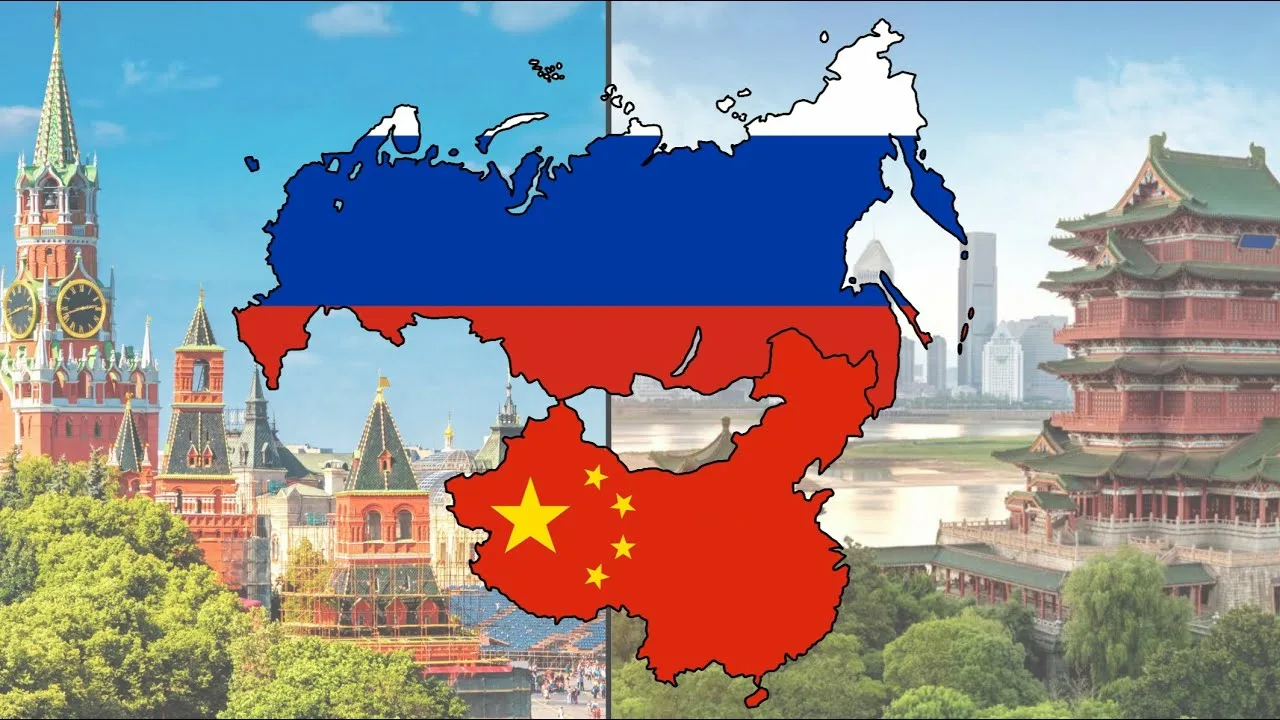
Russia and China are advancing bilateral economic cooperation with an investment portfolio exceeding $200 billion, Russian First Deputy Prime Minister Denis Manturov announced at a meeting of the Intergovernmental Commission on Investment Cooperation in China. More than half of this amount is allocated to 63 major projects, of which 46 are already being implemented. Special attention is being given to the development of transport and logistics infrastructure, metallurgy, chemical industry, mechanical engineering, forestry, agriculture, and trade.
The portfolio continues to expand. In 2026, new initiatives were added, including automotive production in three Russian regions — Kaluga, Moscow Oblast, and St. Petersburg — as well as alumina production in China’s Hebei Province. The countries are also working on a pool of promising future projects, including soluble cellulose and viscose fiber production in Irkutsk Oblast, and the construction of a scientific and clinical center for ion-proton therapy in Moscow.
The Russian-Chinese Intergovernmental Commission on Investment Cooperation currently includes 89 projects worth over $200 billion across sectors such as metallurgy, chemical industry, mechanical engineering, forestry, agriculture, transport and logistics, and trade. The two countries also cooperate successfully in nuclear energy and space exploration.
Beyond the numbers, the nature of bilateral economic ties is undergoing a profound transformation. Chinese capital is accelerating its shift from “trader” to “investor” — from selling goods to building factories. With Russia’s “International Territories of Advanced Development” (ITAD) policy entering substantive implementation in 2026, industrial cooperation in the Russian Far East is entering a phase of institutionalized, large-scale development. Bilateral trade is moving beyond shallow buyer-seller relationships toward deep industrial integration and strategically aligned interests.
Russian Far East data shows 93 projects with Chinese participation currently underway, with total investment of approximately 1 trillion rubles. The new Russia-China investment protection agreement, which took effect in 2025, has further elevated the level of investment and supply chain cooperation between the two countries.
The ITAD policy, modeled in part on China’s successful industrial park experience, offers long-term corporate profit tax exemptions for Chinese investors, reduced social insurance rates, priority infrastructure development, and free customs zone status. Pilot projects have already been identified: an industrial park in the Amur Region, a Russian-Chinese agro-park in Primorsky Krai, and a technopark on Bolshoy Ussuriysky Island. The policy is designed to address the pain points of foreign investors with long-term, stable, and inclusive incentives, moving beyond short-term stimulus to create a lasting institutional framework.
The transformation is being driven by multiple factors: evolving geopolitical realities, complementary economic strengths, and elevated strategic coordination between the two countries. Russia needs capital and technology for development, while China seeks stable resource supplies and overseas market access. Together, both sides are advancing cooperation from short-term trade to long-term industrial positioning.